The CVPR 2026 Workshop on Autonomous Driving (WAD) brings together leading researchers and engineers from academia and industry to discuss the latest advances in autonomous driving. Now in its 9th year, the workshop has been continuously evolving with this rapidly changing field and now covers all areas of autonomy, including perception, behavior prediction and motion planning. In this full-day workshop, our keynote speakers will provide insights into the ongoing commercialization of autonomous vehicles, as well as progress in related fundamental research areas. Furthermore, we will host a series of technical benchmark challenges to help quantify recent advances in the field, and invite authors of accepted workshop papers to present their work.
-
[Mar 3] Our paper track is now closed. Thanks to everyone submitting their work![Feb 24] We have extended the workshop paper submission deadline to Monday, March 2, 2026.[Feb 23] The 2026 Argoverse Scenario Mining challenge is now online.[Jan 29] We released our call for papers. Papers are due by Friday, February 27, 2026.[Dec 20] The workshop got accepted. More updates to follow soon.Call for Papers
Important Dates
- Workshop paper submission deadline:
Friday, February 27, 2026Monday, March 2, 2026 (23:59 PST)Notification to authors: Friday, March 20, 2026Camera ready papers and copyright forms due: Friday, April 10, 2026Topics Covered
We invite submissions of original research contributions in machine perception, computer vision, prediction, planning and simulation related to autonomous vehicles, such as (but not limited to):
- Foundational models for autonomous driving.Vision language models (VLMs) and large language models (LLMs) for solving autonomous vehicle related tasks such as prediction or planning.Autonomous navigation and exploration based on camera, laser, radar or related measurements.Embodied AI for autonomous driving.Sensor fusion and multi-modal perception algorithms for scene understanding.Bird’s eye view methods for autonomous driving, such as BEV-based 3D detection, BEV segmentation, occupancy grids, HD-maps, and topological lane graphs.Vision-based driving assistance, driver monitoring and advanced interfaces.Sensor simulation, neural rendering / NeRFs, 3D Gaussian Splatting, generative models for 3D assets or driving environments.Diffusion models for prediction and planning.Mapless autonomous driving.Cooperative perception and planning based on vehicle-to-everything (V2X) / vehicle-to-vehicle communication.Transfer learning and domain adaptation in the autonomous vehicle domain.Simulation for autonomous driving.Online sensor calibration.SLAM and 3D reconstruction algorithms.Validation and interpretability of autonomous systems.Adversarial learning, adversarial attacks, robustness and handling of uncertainty in autonomous systems.
Presentation Guidelines
All accepted papers will be presented as posters. The guidelines for the posters are the same as at the main conference.Submission Guidelines
- We solicit short papers on autonomous vehicle topicsSubmitted manuscript should follow the CVPR 2026 paper templateThe page limit is 8 pages (excluding references)We do not accept dual submissionsSubmissions will be rejected without review if they:
- contain more than 8 pages (excluding references)violate the double-blind policy or violate the dual-submission policyThe accepted papers will be linked at the workshop webpage and also in the main conference proceedings.Papers will be peer reviewed under double-blind policy, and must be submitted online.
Submission Instruction
Submit your papers through CMT: https://cmt3.research.microsoft.com/WAD2026Acknowledgement
The Microsoft CMT service was used for managing the peer-reviewing process for this conference. This service was provided for free by Microsoft and they bore all expenses, including costs for Azure cloud services as well as for software development and support.Tentative ScheduleFollow the livestream on the CVPR Virtual Website. Recordings will be published after the workshop.
09:15am09:30amOpening Remarks09:30am10:00amKeynote 1Title: To be announced10:00am10:30amKeynote 2Title: To be announced10:30am11:00amCVPR AM Coffee Break11:00am11:30amKeynote 3Title: To be announced11:30am12:00pmDataset Challenges12:00pm01:30pmLunch Break & Poster Session
Poster Location: To be announced01:30pm02:00pmKeynote 4Title: To be announced02:00pm02:30pmKeynote 5Title: To be announced02:30pm03:00pmCVPR PM Coffee Break03:00pm03:30pmKeynote 6Title: To be announced03:30pm04:00pmKeynote 7Title: To be announced04:00pm05:00pmLightning TalksTo be announced05:00pm05:05pmClosing Remarks
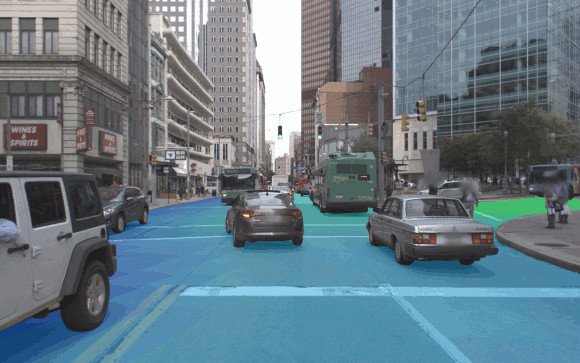
ChallengesThe workshop will host the 2026 Argoverse challenges, including Scenario Mining and LiDAR Scene Flow. To participate, visit the Argoverse website. Stay tuned for further updates.